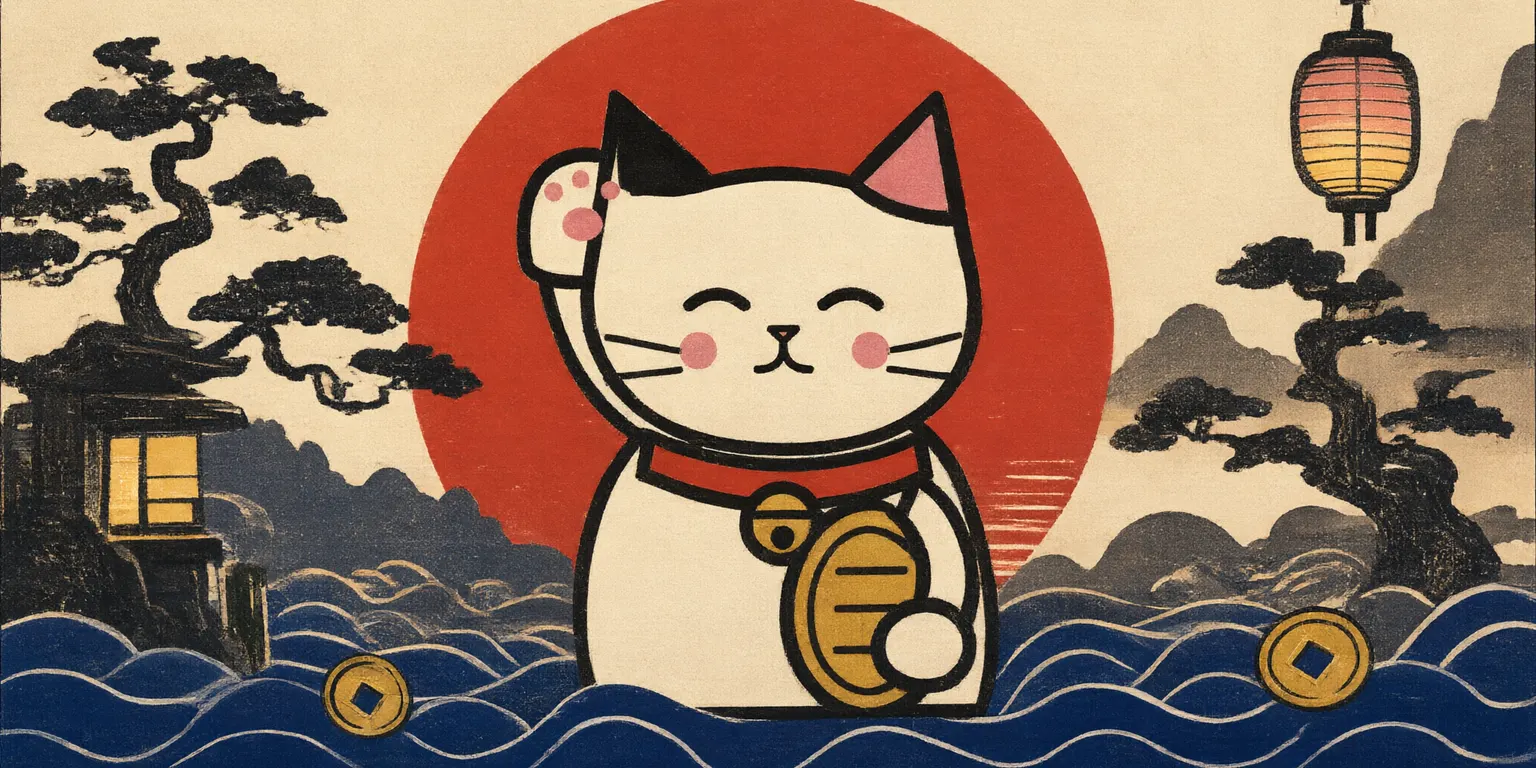
Emakimono · a hand scroll in four scenes
How Tama saved a lord
-
 壱
壱
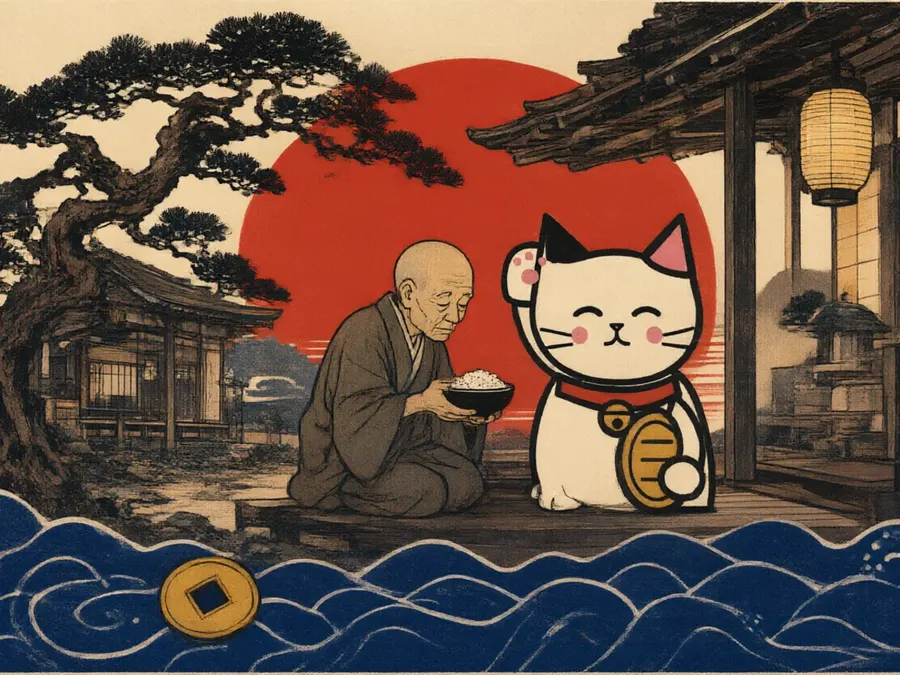
A poor temple
Edo, the 1600s. At Gotoku-ji, a crumbling temple in Setagaya, a priest with almost nothing shares what little rice he has with his cat, Tama.
-
 弐
弐
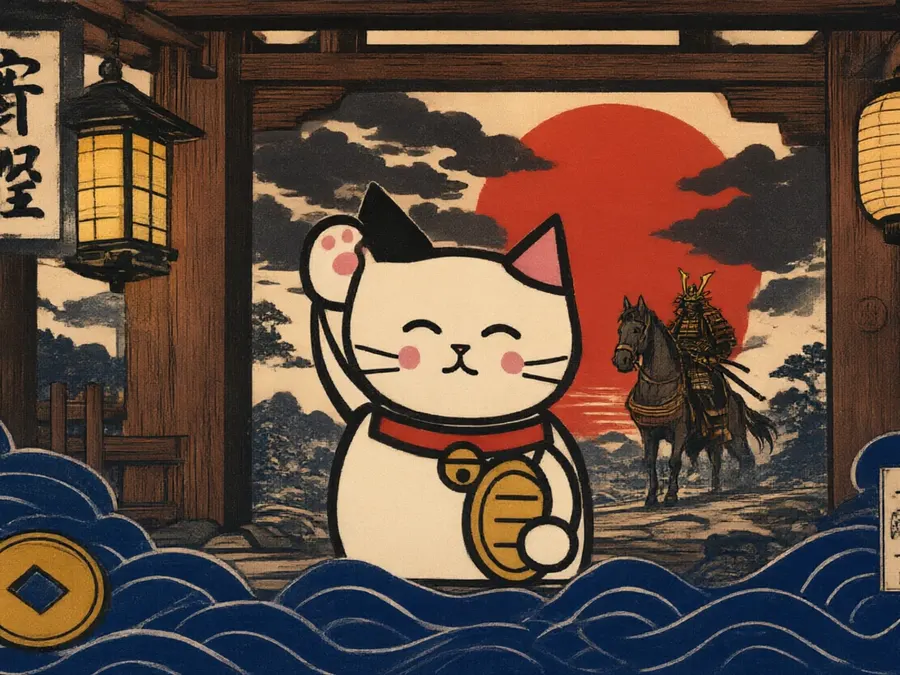
A paw raised
A lord, Ii Naotaka, is passing on the road when he sees Tama at the gate, lifting a paw as if calling him in. Curious, he follows the cat inside.
-
 参
参
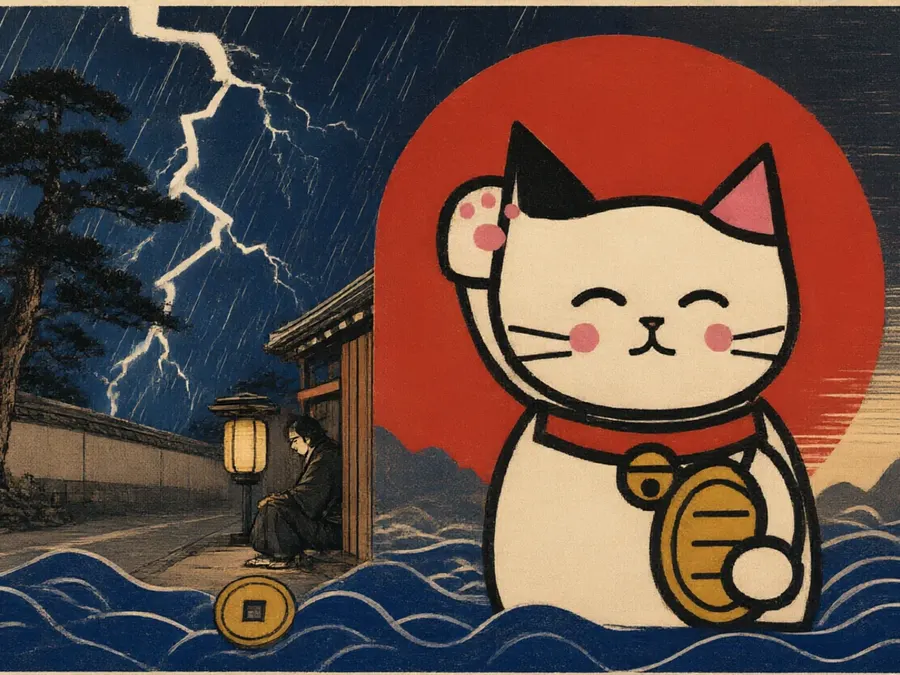
The storm breaks
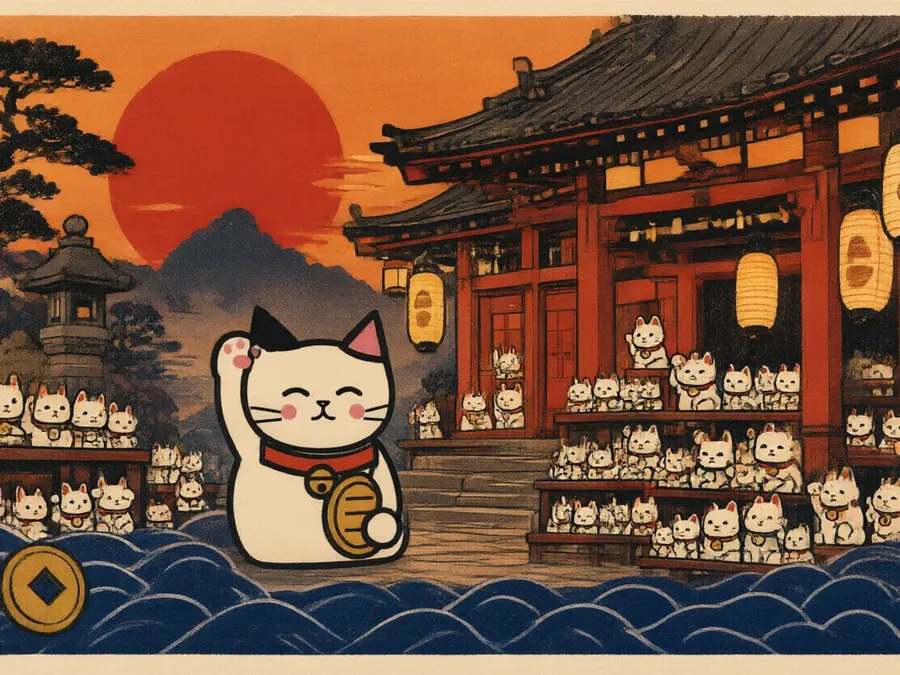
A moment later the sky opens and lightning splits the very spot where he had been standing. The cat had called him out of harm's way.
-
 肆
肆
Luck repaid
Grateful, the lord becomes the temple's patron and it flourishes. Today Gotoku-ji's grounds hold thousands of white beckoning cats, left by visitors who came to ask for a little of Tama's luck.
Placard · how to read a beckoning cat
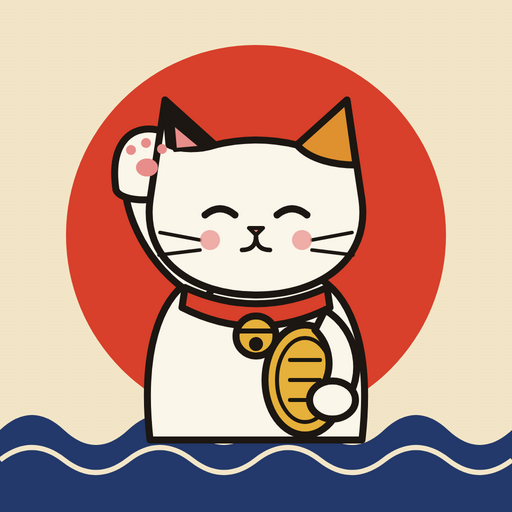
Every detail means something
- 1The raised paw
- A raised right paw calls in money; a raised left paw calls in customers. $NEKO lifts the right. The higher the paw, the further the luck is called from.
- 2The red collar and bell
- Edo-era house cats wore red silk collars with a small bell so they could be heard about the house. The charm kept them.
- 3The koban
- An oval gold coin of the Edo period. The cat's is usually inked 千万両, ten million ryō, an absurd fortune: the cat never asks for small luck.
- 4The calico coat
- White for happiness, patches of orange and black for the mike-neko, the three-coloured cat, held to be the luckiest of all.
御神籤 · a fortune, just for fun
Shake the box
At a shrine you shake a hexagonal box until one numbered stick slides out, then trade the number for a paper fortune. Ask the cat. A bad slip gets tied to the rack and left behind; a good one goes home in your pocket.